



The worlds of politics and pop culture rarely collide in ways that genuinely surprise people anymore, yet every once in a while an unexpected pairing captures global attention. Such has been the case with former Canadian Prime Minister Justin Trudeau and American pop superstar Katy Perry, whose recent public appearances have fueled months of speculation and fascination. A new spark was added to that ongoing buzz when former Japanese Prime Minister Fumio Kishida casually referenced Perry as Trudeau’s “partner” in the caption of an Instagram post. It was the kind of offhand remark powerful public figures seldom make unintentionally, and it sent social media into a frenzy as fans tried to decipher whether Kishida had simply misspoken—or inadvertently confirmed what many already suspected.
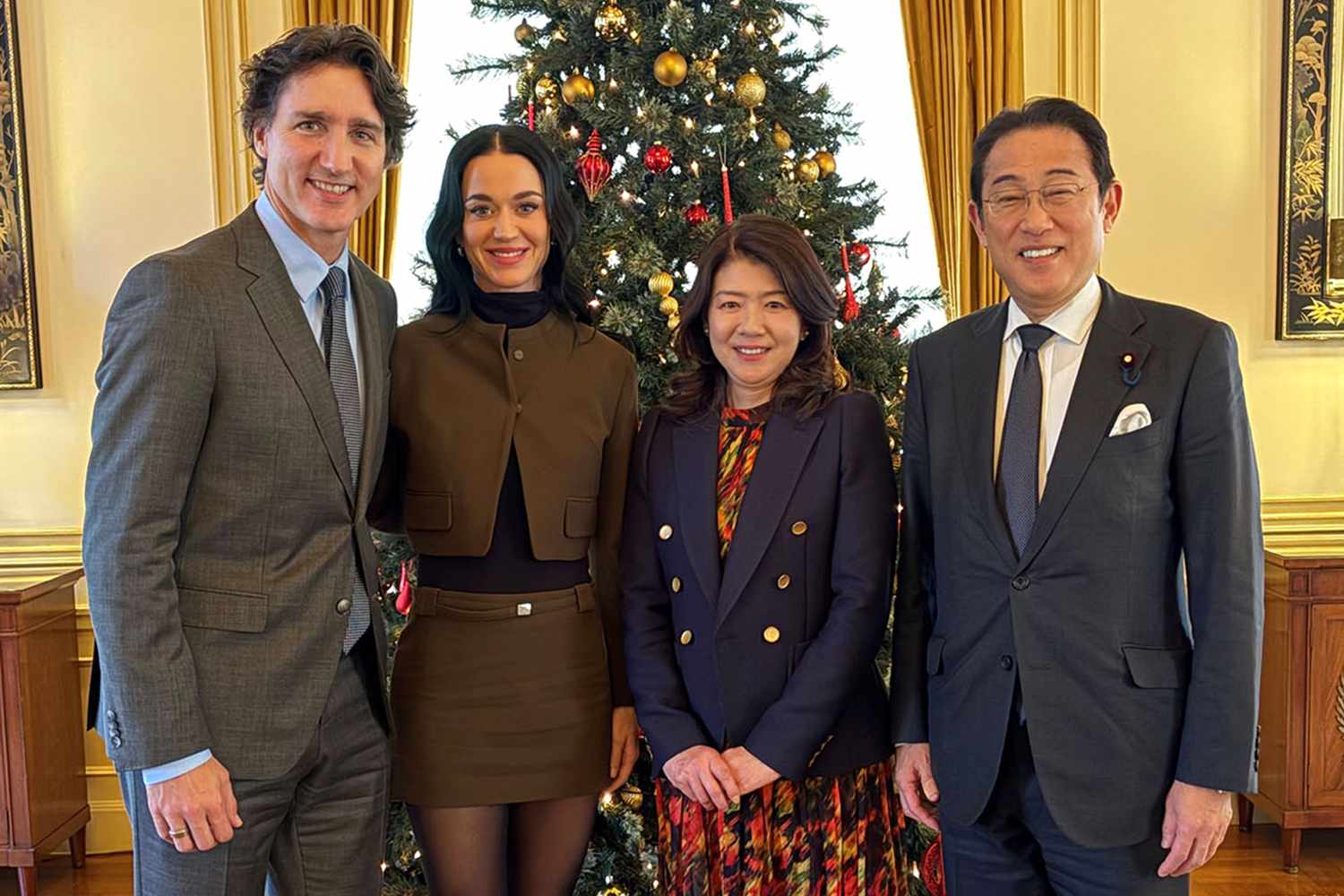
The photo that prompted the commotion was taken on December 4, during what appeared to be a relaxed, festive lunch shared by Kishida, his wife Yuko, Trudeau, and Perry. Positioned in front of a glimmering Christmas tree adorned with gold and red ornaments, the two couples looked comfortable and warm, a tableau that suggested familiarity rather than formality. Kishida’s caption, translated from Japanese, mentioned that “former Canadian Prime Minister Trudeau came to Japan with his partner Katy Perry and had lunch with us,” a sentence that quickly made headlines in several languages. Although the post itself did not comment on any romantic relationship, the use of the word “partner” was notable. It was not lost on observers that Japanese officials are typically meticulous in their phrasing, especially in posts meant for public consumption. For many, it was the strongest hint yet that the rumored couple may indeed be dating.
Long before this diplomatic luncheon, Trudeau and Perry had already found themselves at the center of widespread speculation. Their rumored connection first gained traction in late July, when Trudeau was spotted attending one of Perry’s shows on her Lifetimes Tour at Montreal’s Bell Centre. What drew even more attention was that he appeared to be there alone, without an entourage or family members, blending into the crowd in a simple black T-shirt. Fans at the concert recorded short clips showing Trudeau leaning casually against a railing as he watched Perry perform. In one video, he could be seen dancing lightly to “Teenage Dream,” one of Perry’s biggest hits from the early 2010s. This moment—an influential political figure openly enjoying a pop concert—was enough to stir curiosity, but it wasn’t until later events that the curiosity gave way to viral intrigue.
Their next public appearance came in Paris on October 25, Perry’s 41st birthday. According to widely circulated paparazzi photos and video footage, the pair attended a cabaret show together. The images showed them leaving the venue hand in hand, navigating a cluster of photographers as they made their way to a waiting car. Perry wore a striking red gown paired with black heels, her hair styled neatly in a bun. Trudeau opted for a black suit, a look reminiscent of his years in office, when his sharp tailoring became part of his political image. The visual contrast between this elegant Parisian evening and the casual Montreal concert months earlier only added to the public fascination with their dynamic.
The blend of showbiz glamour and political gravitas has always captured public imagination, but in this case, timing played an important role. Both Perry and Trudeau have experienced major personal changes in the last couple of years, which has contributed to the interest in their bonding moments. Trudeau, who stepped down as prime minister earlier in 2024 amid what many analysts called a bleak outlook for his party’s electoral chances, separated from his wife Sophie Grégoire Trudeau in 2023. The couple married in 2005 and share three children, and their separation made headlines around the world. Perry, for her part, experienced the end of her longtime relationship with actor Orlando Bloom, with whom she shares a daughter. Their breakup was reported in July, marking another shift in the private life of an artist whose personal journey has often unfolded under intense media scrutiny.
Against this backdrop, Trudeau and Perry’s public interactions have taken on a narrative quality that people seem eager to interpret. To some, the idea of a former head of government and a global pop icon exploring a relationship feels like the plotline of a celebrity romance film. To others, it simply reflects the reality that well-known figures can cross paths in ways that transcend the roles the public assigns to them. What has made this story resonate so strongly, however, is the sense that each new appearance by the duo adds just enough detail to feed curiosity without providing definitive answers. The hand-holding in Paris, the concert attendance in Montreal, and now the lunch in Japan have all combined to create what is essentially a slow-unfolding public mystery.
The scene in Tokyo, where Kishida’s Instagram post originated, added an especially intriguing layer. Diplomatic meetings are usually choreographed occasions, even when they occur off the clock, and the guests who accompany world leaders tend to be noted carefully. Perry’s presence alongside Trudeau in a social context with one of Japan’s most influential political families raised questions about how close the pair have become and how comfortable they are navigating public life as a duo. The Christmas tree and holiday décor added a warm, familial touch to the image, softening what might otherwise have looked like a formal meeting. It suggested that the group had gathered not for political strategy or international cooperation, but for a relaxed seasonal celebration.
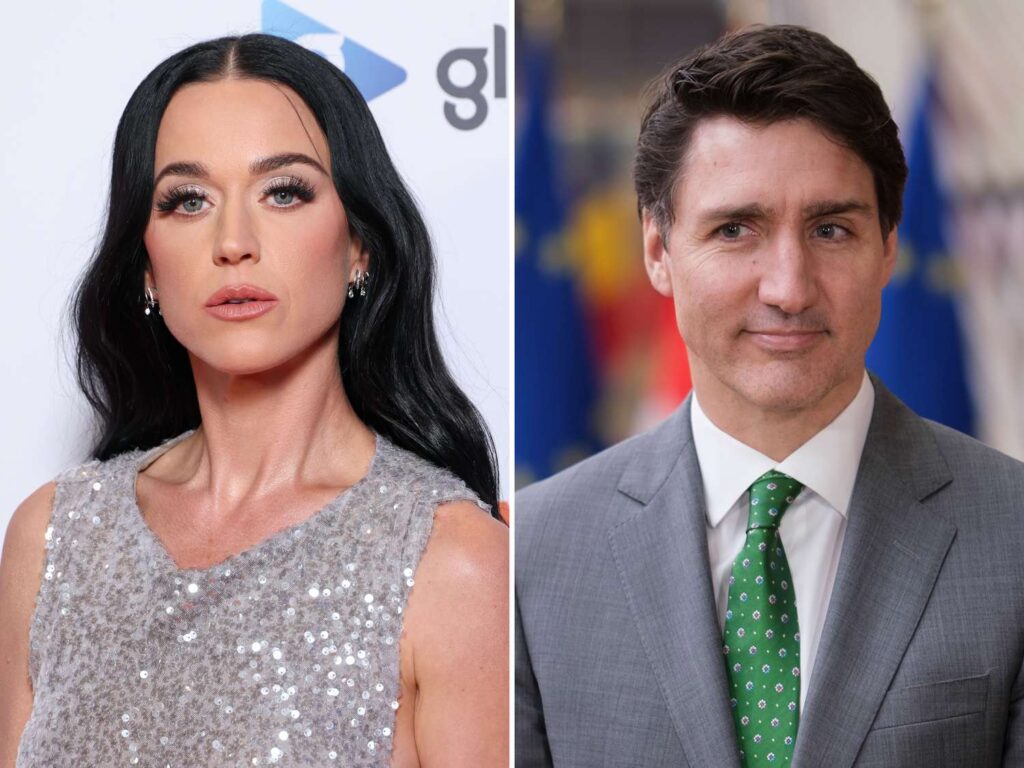
While none of the individuals involved have publicly commented on the nature of Perry and Trudeau’s relationship, their recent behavior has undoubtedly shaped public perception. The swirling speculation reflects more than just celebrity gossip—it taps into a longstanding fascination with the lives of people who hold visible influence, whether in politics, entertainment, or both. Perry has spent years in the public eye, transitioning from her early pop persona into a globally recognized performer, philanthropist, and television personality. Trudeau, meanwhile, has carved out an international reputation that far exceeds the typical boundaries of Canadian politics, becoming a figure who attracts global media coverage even after leaving office. Together, they represent two very different but equally public-facing careers, making their apparent connection a compelling focus for millions.
Media reactions to their appearances have ranged from playful curiosity to serious attempts at analysis. Commentators have dissected everything from their body language in Paris to the significance of Trudeau choosing to attend a pop concert alone. Fans of Perry, who have followed her through various personal and professional chapters, have noted that she seems to be embracing new experiences after a difficult year. Meanwhile, observers familiar with Trudeau’s political legacy have remarked on how relaxed and open he appears in the images and videos, suggesting a period of personal reinvention following his emotional and political transition out of office.
Of course, public fascination often says as much about society as it does about the individuals involved. People tend to gravitate toward stories that blend the familiar with the unexpected, and the idea of a former prime minister embarking on a possible romance with a globally recognized pop star fits neatly into that category. It is a reminder that public figures, despite their influence and responsibilities, live lives shaped by the same impulses and emotional journeys as everyone else. Perhaps that is why the idea of Trudeau and Perry traveling together, enjoying celebrations, and appearing at artistic performances resonates more deeply than a standard celebrity rumor: it humanizes both figures in ways that their carefully managed professional identities rarely do.
The image shared by Kishida, in particular, captured more than just a holiday moment. It illustrated how two people from very different worlds can find connection through shared experiences, friendships, and journeys. The warm tones of the Christmas decorations, the relaxed smiles, and the intimate group arrangement all helped paint a picture of comfort and closeness. The caption, whether intentional or a simple linguistic nuance, provided the final detail needed to ignite a wave of renewed speculation.
In truth, the precise nature of their relationship remains unconfirmed, and it is entirely possible that the two share nothing more than friendship and mutual support as they navigate transformative periods in their personal lives. Still, the story continues to take on a life of its own. Fans and commentators alike seem invested in following each new development, not out of expectation for a public announcement but out of genuine curiosity about how this unique connection will evolve. Whether or not the pair choose to clarify their relationship in the future, the fascination they have generated says much about the way modern society engages with the personal lives of public figures—especially when those figures come from such different spheres.
Their shared appearances throughout 2024 have already created a narrative arc that feels emblematic of a year marked by reinvention for both of them. Perry, emerging from a breakup and stepping into a new stage of her career, has embraced performances that reflect both artistic maturity and personal renewal. Trudeau, who spent nearly a decade under the weight of political leadership, has entered a chapter defined by exploration and change. If nothing else, their connection—whatever its nature—has become a lens through which audiences around the world are watching two very public people rediscover aspects of life that exist beyond careers and headlines.
As the world continues to react to Kishida’s surprising phrasing and the growing collection of visual moments shared between Perry and Trudeau, the story will likely keep evolving. For now, what remains clear is that their bond, described in various ways by observers, has intrigued an international audience. Some see a romantic narrative unfolding; others view it as the friendship of two individuals brought together by shared experiences in the spotlight. Regardless of which interpretation ultimately proves true, the public interest surrounding them speaks to a universal desire to witness stories of connection, especially between figures whose lives often feel distant or inaccessible.

In the end, whether the pair chooses to address the rumors or let the speculation continue, this unexpected intersection of politics and pop stardom has created a moment that is both lighthearted and culturally significant. It has reminded people around the world that behind the carefully constructed images, press releases, and performances are human beings capable of surprising choices, new relationships, and personal evolution. And as long as they keep stepping out together—whether at concerts, cabaret shows, or holiday lunches in Tokyo—people will continue to watch, wonder, and interpret the story in their own way.