


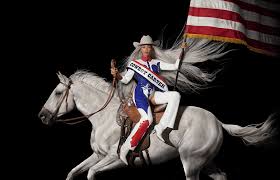
Beyoncé Knowles-Carter has never been content with simply putting on a show. For more than two decades, she has treated every era of her career as an opportunity to build worlds, challenge expectations, and leave something lasting behind. With the “Cowboy Carter” tour, she did more than dominate stadiums and break financial records — she reframed a genre, honored forgotten histories, and reminded audiences that behind every moment of glamour is an extraordinary amount of intention, labor, and vision.
In Pollstar magazine’s year-end issue, released December 15, Beyoncé offered a rare and thoughtful look into the mindset that fueled her history-making tour. Gracing the cover of the industry’s most influential live-music publication, she spoke candidly about the purpose behind “Cowboy Carter,” the responsibility she feels as an artist, and the deeper meaning of a tour that reshaped country music’s boundaries while celebrating American resilience.
At its core, the “Cowboy Carter” tour was born from reverence. Beyoncé made it clear that this era was never about novelty or provocation for its own sake. Instead, it was rooted in her long-standing love for country music and her commitment to preserving the often-overlooked legacy of Black cowboys and musicians who helped shape the genre. For years, she has used her platform to illuminate erased or ignored histories, and this tour became one of her most ambitious efforts yet to restore those narratives to their rightful place.
The intention, she explained, was to celebrate resilience — not just her own, but America’s. That theme echoed throughout the production, the music, and the storytelling embedded in each performance. While the spectacle dazzled fans, the emotional weight came from something deeper: a reclamation of space. Beyoncé was not asking for permission to exist in country music. She was asserting that she had always belonged there.
That assertion resonated loudly across the globe. The “Cowboy Carter” tour wrapped up on July 26 in Las Vegas, closing out a remarkable run that spanned 32 stadium dates across the United States and Europe. The final show felt less like an ending and more like a celebration of everything the era represented. Fans were treated to surprise appearances by Destiny’s Child, a reminder of Beyoncé’s roots, as well as Jay-Z and Shaboozey, underscoring the interconnectedness of her personal, musical, and cultural journey.
Financially, the tour was historic. The nine-city stretch alone earned more than $407 million, officially making it the highest-grossing country tour of all time. In the process, Beyoncé extended her already-unmatched records as the highest-grossing Black artist and the highest-grossing R&B artist in history. Billboard later confirmed that “Cowboy Carter” was the highest-grossing tour of 2025 by a solo artist — a milestone that further cemented her place not just as a pop icon, but as a live-performance powerhouse.
Yet numbers, as staggering as they are, tell only a fraction of the story. Beyoncé has always measured success by impact, not just revenue. In Pollstar, she emphasized how deeply involved she remains in every aspect of her productions. From sound design to choreography, visuals to props, she described an exhaustive creative process driven by instinct, discipline, and emotional truth.
She spoke about rearranging songs repeatedly, refining visual edits, and reworking choreography until every element felt alive. Her goal was not perfection for perfection’s sake, but soul. She pushes until she can feel the emotion embedded in each component, until the performance becomes more than the sum of its parts. For this tour, one of the guiding missions was to “bend light,” a phrase that perfectly captures the way she approaches stagecraft — as something almost spiritual, where sound, movement, and imagery converge into an immersive experience.
Beyoncé is quick to dismantle the idea that singing and dancing define her job. To her, those are the privileges — the reward for countless hours spent directing, refining, and aligning a massive creative machine. Her true role, she says, is orchestrating how everything works together. That perspective explains why her tours feel less like concerts and more like carefully constructed universes, each with its own internal logic, emotional arc, and cultural significance.
The opening night of the tour at SoFi Stadium in Los Angeles on April 28 set the tone immediately. With a 39-song set list, Beyoncé delivered a performance that moved effortlessly through genres, blending country, R&B, pop, soul, and experimental sounds. Fashion played a central role, with bold, Western-inspired looks that paid homage to tradition while reimagining it through a modern, high-fashion lens. But beneath the surface-level spectacle was pointed commentary — a challenge to industry norms that have long excluded voices like hers from country music’s mainstream narrative.
Her upbringing in Texas served as both inspiration and anchor throughout the tour. Beyoncé wove personal history into the production, transforming the stage into a living memory. A salon paid tribute to her mother’s hair salon, where she grew up watching entrepreneurship, creativity, and community intersect. A saloon honored her great-grandfather, who sold moonshine in Alabama, connecting her present success to the survival and ingenuity of those who came before her.
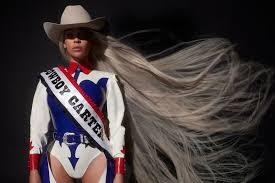
The Texas Lone Star appeared as a recurring symbol, alongside visual references inspired by Marfa, the small West Texas art town known for its stark beauty and minimalist aesthetic. These details weren’t decorative — they were intentional markers of identity. Beyoncé wasn’t just performing country music; she was placing herself firmly within a lineage shaped by geography, family, and cultural inheritance.
For fans, the result was transformative. Beyoncé has always spoken about her audience with deep gratitude, and in Pollstar she reiterated how important it is that people leave her shows feeling changed. Her goal is not simply entertainment, but renewal. She wants fans to walk away reinvigorated, more in love with themselves, and more connected to the people they care about. That emotional intention has become a hallmark of her live performances, and “Cowboy Carter” elevated it to new heights.
What makes this era particularly significant is Beyoncé’s awareness of its long-term impact. She understands that the true legacy of “Cowboy Carter” will not be measured only by records broken today, but by the doors it opens tomorrow. By boldly occupying space in country music, she has helped reinvigorate the genre, drawing in new audiences and expanding its possibilities.
She spoke powerfully about the children who attended the shows — the young girls and boys who saw her command the stage, unapologetically blending genres and identities. In ten years, she believes, those children will be adults who feel entitled to respect as country artists, free to sing whatever music they love without being boxed in or dismissed. That vision, more than any chart position or revenue milestone, is what makes her proud.
The “Cowboy Carter” tour was not an isolated moment, but part of a larger pattern in Beyoncé’s career. Time and again, she has used her influence to question who gets to be seen, heard, and celebrated. Whether through albums that center Black history, performances that elevate marginalized voices, or tours that challenge genre boundaries, she consistently reframes the conversation around power and belonging.
In an industry that often rewards repetition and safety, Beyoncé continues to choose risk. She enters spaces where she knows she will be scrutinized more harshly, questioned more aggressively, and held to higher standards — and then she exceeds them. The grind behind the glamour, as she revealed in Pollstar, is relentless. But it is also purposeful, driven by a belief that art can reshape culture and that visibility can rewrite narratives.
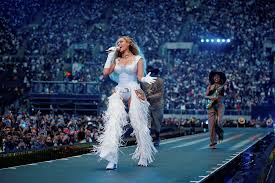
As the curtain closes on the “Cowboy Carter” era, its echoes are only beginning to be felt. Country music has been forced to reckon with its roots and its future. Fans have been reminded of the power of intentional artistry. And Beyoncé has once again demonstrated that her legacy is not defined by staying within lines, but by redrawing them entirely.
In the end, “Cowboy Carter” was more than a tour. It was a statement of identity, a tribute to ancestry, and a challenge to the status quo — delivered with unmatched precision, heart, and resolve. For Beyoncé, the stage is not just a place to perform. It is a place to tell the truth, honor the past, and imagine a more expansive future for everyone watching.