



Chappell Roan never expected a single Instagram post to spark such a loud and emotional conversation, but in the fast-moving world of pop culture, moments like these can quickly become defining snapshots of an artist’s values. What began as a brief tribute to a legendary film figure turned into a public reckoning, not just for Roan, but for many fans grappling with how cultural icons should be remembered when their legacies are deeply flawed.
When Brigitte Bardot died on Dec. 28 at the age of 91, the news traveled quickly, especially among those familiar with her lasting imprint on cinema and fashion. Bardot had long been considered a symbol of sensual freedom and cinematic rebellion, a woman whose image reshaped how femininity was portrayed on screen in the mid-20th century. For decades, her name had floated through pop culture as shorthand for glamour, confidence and defiance. It was this version of Bardot that Chappell Roan had in mind when she referenced her in “Red Wine Supernova,” a song released in 2023 that helped define Roan’s bold, playful sound.
The opening line of the track paints Bardot as a figure of intrigue and influence, a muse who represents discovery and desire. For Roan, the lyric was rooted in aesthetic inspiration rather than political admiration, a nod to the visual language and sexual autonomy Bardot once embodied on screen. So when news of Bardot’s death broke, Roan took to Instagram to express a simple sentiment, writing that the actress had inspired “Red Wine Supernova” and offering a respectful farewell.
What followed was immediate and intense. Fans flooded the comments with reminders of Bardot’s controversial history, pointing out that the actress had spent years making racist, sexist and homophobic remarks. For many listeners, especially those from LGBTQ+ communities who see Roan as an outspoken ally, the tribute felt unsettling. The disconnect between Bardot’s documented views and Roan’s advocacy was impossible to ignore, and the criticism made that clear within hours.
Rather than staying silent or issuing a carefully crafted statement through a publicist, Roan responded directly. On Dec. 29, she returned to Instagram with a raw, unfiltered message that acknowledged her lack of awareness. She admitted she had not known about Bardot’s history of hateful rhetoric and said she did not condone those views. Her disappointment was evident, not just in what she wrote, but in the tone itself, which felt more like a personal realization than a defensive explanation.
The reaction captured a larger cultural tension that surfaces again and again when beloved or influential figures die. Bardot’s legacy has always been complicated, but for younger generations, her controversial views are often overshadowed by the way she has been romanticized in art, film references and fashion imagery. Many people know her name before they know her record, which includes multiple convictions by the French government for inciting racial hatred.
In her 2003 book “A Cry in the Silence,” Bardot criticized immigration and what she described as the “Islamisation of France,” language that drew widespread condemnation. She repeatedly targeted Muslims in her public statements and was fined several times for remarks deemed inflammatory. Her comments extended beyond race and religion. Bardot once referred to gay people as “fairground freaks,” a phrase that remains deeply offensive, and she openly dismissed the #MeToo movement, calling it hypocritical and uninteresting at a time when many women were sharing stories of abuse and exploitation.
Politically, Bardot aligned herself with far-right ideologies, publicly supporting figures such as Marine Le Pen, leader of France’s National Rally party. Her views placed her firmly on one side of the political spectrum, one associated with nationalism, exclusion and hostility toward immigrants. These positions were not hidden or subtle; they were expressed openly and repeatedly over many years, shaping how she was perceived beyond her film career.
This history stands in sharp contrast to Chappell Roan’s own public identity. Roan has built her career around themes of self-expression, queerness and empowerment. Her performances celebrate individuality, and her interviews often emphasize the importance of safe spaces for marginalized communities. She has consistently spoken out in support of LGBTQ+ rights and feminist causes, and she has used major platforms to address issues such as fair pay and access to health insurance for musicians. For fans who admire her not just for her music but for her values, the Bardot tribute felt out of step.
The backlash was not just about Bardot herself, but about what it means to acknowledge influence in an era where audiences expect ethical awareness from artists. Fans increasingly see themselves as participants in shaping the moral boundaries of pop culture, and social media gives them the tools to voice approval or disappointment instantly. Roan’s experience illustrates how quickly admiration can turn into accountability, and how even unintended gestures can carry weight.
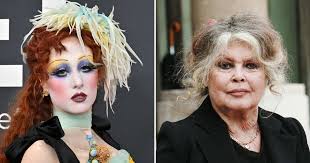
At the same time, Bardot’s legacy is not entirely one-dimensional. Despite her alignment with far-right politics, she was also a lifelong animal rights activist. She founded an animal welfare organization and frequently spoke out against practices she considered cruel. In 2017, she sharply criticized then-President Donald Trump for authorizing the import of elephant hunting trophies from Zimbabwe. In a letter released through her foundation, Bardot accused Trump of enabling the destruction of an ancient species and abusing power over the natural world. The language was scathing and moralistic, highlighting how Bardot could take strong ethical positions in some areas while holding deeply problematic views in others.
These contradictions complicate how figures like Bardot are remembered. They also raise difficult questions about whether cultural impact can or should be separated from personal beliefs. For artists like Roan, who draw inspiration from imagery, mood or historical symbolism, the challenge lies in navigating these legacies without endorsing the harm attached to them.
Roan’s response suggests she understood that distinction too late, but also that she was willing to learn publicly. Her admission of ignorance did not satisfy everyone, but many fans appreciated the honesty. Rather than doubling down or minimizing concerns, she acknowledged the criticism and clarified where she stood. In an industry where apologies are often carefully managed, her reaction felt candid and human.
The incident also reflects broader generational shifts in how icons are viewed. Figures once celebrated without question are now being reexamined through contemporary lenses, and their words and actions are scrutinized alongside their achievements. This reassessment can be uncomfortable, especially when it challenges long-held narratives, but it has become an integral part of cultural conversation.
For Roan, the moment may ultimately reinforce the values that have attracted her audience in the first place. By openly distancing herself from Bardot’s views and acknowledging the mistake, she reaffirmed her commitment to inclusivity and accountability. The situation became less about the lyric in “Red Wine Supernova” and more about how she responded when confronted with new information.
In a way, the episode mirrors the themes that often appear in Roan’s music: growth, self-discovery and the willingness to confront uncomfortable truths. While the Bardot reference was rooted in an image of cinematic freedom, the backlash forced a deeper look at what freedom means when it excludes or harms others. That reflection resonated with fans who expect artists not just to entertain, but to engage thoughtfully with the world around them.
As pop culture continues to evolve, moments like this will likely become more common. The internet has made it easier than ever to access information, challenge narratives and hold public figures accountable. For artists, that means inspiration must be balanced with awareness, and admiration must be tempered by context.
Chappell Roan’s experience serves as a reminder that influence does not exist in a vacuum. Cultural symbols carry histories, and those histories matter. By acknowledging her misstep and listening to her audience, Roan turned a potential controversy into an opportunity for dialogue, reflection and reaffirmation of her values. In doing so, she demonstrated that growth in the public eye is not about never making mistakes, but about how one responds when those mistakes are brought to light.