


The release of the long-anticipated Epstein files has reignited global scrutiny over one of the most controversial figures in modern British royal history: Prince Andrew, formerly known as the Duke of York. While the British monarchy has weathered scandals for centuries, few episodes have cut as deeply or lingered as stubbornly as Andrew’s association with the disgraced financier Jeffrey Epstein. The newly unveiled documents and images, released on December 19 under the Epstein Files Transparency Act, have once again dragged the former prince into the spotlight, underscoring how unresolved questions and disturbing associations continue to haunt his legacy.
Among the thousands of documents made public by the U.S. Department of Justice are photographs that have quickly circulated across media outlets and social platforms. One image, in particular, has proven especially unsettling. It depicts a sharply dressed Prince Andrew lying across the laps of five women, their faces deliberately obscured by the Department of Justice. The photograph also includes Ghislaine Maxwell, Epstein’s longtime associate and a convicted sex trafficker, whose presence alone adds a chilling context to the scene. Though the image lacks clear details about when or where it was taken, its release has intensified public suspicion and discomfort, reinforcing long-held concerns about Andrew’s proximity to Epstein’s inner circle.
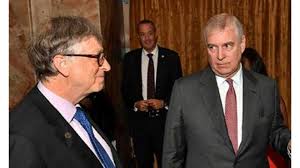
Another photograph shows Prince Andrew standing alongside Microsoft co-founder and philanthropist Bill Gates. Both men are wearing suits, and while the image appears outwardly benign, the absence of context has fueled speculation. Gates has acknowledged meeting Epstein in the past, a fact that has already drawn criticism and questions of judgment. Andrew’s presence in the same orbit only compounds the impression of a powerful network that once surrounded Epstein, raising uncomfortable questions about how deeply his influence extended and who knowingly or unknowingly moved within it.
Prince Andrew’s downfall did not occur overnight. For years, whispers about his friendship with Epstein circulated quietly, often dismissed or downplayed as mere guilt by association. That changed dramatically when Virginia Giuffre, one of Epstein’s most prominent accusers, came forward with detailed allegations that placed Andrew at the center of her story. Giuffre alleged that Epstein trafficked her to the British royal on three separate occasions in the early 2000s, when she was just 17 years old. According to her claims, these encounters occurred in London, New York, and at Epstein’s private island in the U.S. Virgin Islands.
The allegations struck at the heart of the monarchy’s public image. Prince Andrew vehemently denied Giuffre’s claims, insisting that he never had sexual contact with her and rejecting any suggestion that he collaborated with Epstein. Yet his attempts to clear his name only seemed to deepen public skepticism. A widely criticized BBC Newsnight interview in 2019, in which Andrew appeared defensive and evasive, proved disastrous. His explanations, including a now-infamous claim that he was physically incapable of sweating at the time of the alleged encounter, were met with disbelief and ridicule, accelerating his fall from grace.
By 2021, the controversy had escalated into a full-blown legal crisis. Giuffre filed a civil lawsuit against Andrew in the United States, formally accusing him of sexual abuse and trafficking. The case placed the royal family in an unprecedented position, with a senior member facing serious allegations in a foreign court. While Andrew continued to deny the claims, the pressure became impossible to ignore. In early 2022, he reached an out-of-court settlement with Giuffre. The settlement included no admission of guilt, but it came at a staggering reputational cost. To many observers, the decision to settle appeared less like vindication and more like an effort to make the problem disappear.
The consequences were swift and severe. Prince Andrew was stripped of his military titles and royal patronages, effectively removing him from public royal life. He lost the honorific “His Royal Highness” in official contexts and was forced to retreat from the public eye. His eviction from Royal Lodge, a prestigious residence within the Windsor estate, symbolized the depth of his exile. Once considered a favored son of Queen Elizabeth II, Andrew became a liability the monarchy could no longer afford to defend.
The newly released Epstein files have reopened wounds that never fully healed. Beyond the photographs, the documents include emails and correspondence that further illuminate Andrew’s relationship with Epstein and Maxwell. One email exchange from 2011, previously obtained by USA TODAY and now recirculating in light of the broader release, features a conversation between Epstein and an individual identified as “The Duke.” The message discusses a media inquiry seeking comment from Maxwell regarding an article published by The Mail on Sunday, which reportedly detailed allegations involving Epstein, Maxwell, and Andrew.
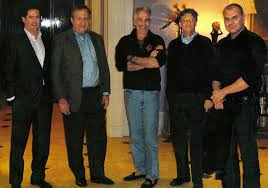
In the exchange, “The Duke” appears startled by the situation, responding, “What? I don’t know any of this. How are you responding?” While the message does not explicitly admit wrongdoing, it suggests a level of communication and familiarity that Andrew has repeatedly downplayed. For critics, such correspondence undermines claims that he severed ties with Epstein long before the financier’s crimes became widely known. For defenders, it is yet another example of circumstantial evidence being interpreted in the harshest possible light.
The broader release of the Epstein files was driven by mounting political pressure in the United States. On November 19, President Donald Trump signed the Epstein Files Transparency Act into law after it passed both chambers of Congress. The legislation required the Department of Justice to release the majority of its files related to Epstein’s investigations within 30 days, setting December 19 as the deadline. The law was framed as a step toward transparency and accountability, aimed at exposing how Epstein was able to operate for so long while maintaining relationships with influential figures.
Trump’s involvement added a sharp political edge to the disclosures. In November, he ordered the Justice Department to launch an investigation into Democrats allegedly linked to Epstein, a move critics characterized as selective and politically motivated. Nevertheless, the law’s passage ensured that a wide range of documents, photographs, and communications would become public, regardless of political affiliation. The result has been a renewed wave of scrutiny not only for Andrew, but for anyone whose name appears in Epstein’s extensive web of contacts.
For Prince Andrew, the timing could not be worse. Although he has largely disappeared from public life, the resurfacing of his name in connection with Epstein threatens to cement his reputation permanently. Each new document, photograph, or email reinforces the perception that his association with Epstein was neither casual nor fleeting. Even without new allegations, the accumulation of evidence continues to erode any remaining sympathy for the disgraced royal.
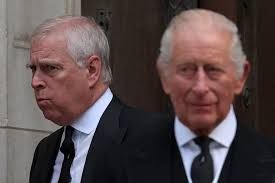
The British monarchy, now under King Charles III, faces the ongoing challenge of managing Andrew’s shadow. While the institution has taken decisive steps to distance itself from him, his status as a king’s brother ensures that he can never be fully erased from the royal narrative. For a monarchy that relies heavily on public trust and moral authority, Andrew’s scandal remains a cautionary tale about privilege, accountability, and the consequences of poor judgment.
Virginia Giuffre’s role in bringing these issues to light cannot be overstated. In her memoir, “Nobody’s Girl,” published posthumously, she detailed the trauma she said she endured and the powerful men she alleged were complicit in her exploitation. Her accusations against Andrew played a central role in reshaping public perception, transforming him from a peripheral figure in the Epstein saga into one of its most prominent symbols. Even in death, her words continue to resonate, challenging institutions and individuals to confront uncomfortable truths.
Ultimately, the Epstein files do not offer neat conclusions. They do not definitively prove every allegation, nor do they absolve those accused. What they do provide is a clearer picture of the social and power dynamics that allowed Epstein to thrive for decades. For Prince Andrew, that picture is deeply unflattering. It places him repeatedly in close proximity to individuals and situations that, at best, demonstrate extraordinary recklessness and, at worst, suggest complicity.
As the world continues to sift through the newly released documents, the conversation surrounding Prince Andrew is unlikely to fade. Each revelation adds another layer to a story that has already reshaped his life and legacy beyond repair. Once a senior royal representing the United Kingdom on the world stage, Andrew now stands as a stark reminder that titles and privilege offer no shield against the consequences of association with one of history’s most notorious criminals. The Epstein files have ensured that, for Prince Andrew, the past is not only inescapable but permanently etched into the public record.