


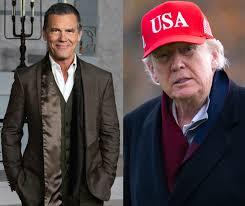
Josh Brolin has never shied away from discussing the stranger, more complicated intersections of his life, and one of the most unexpected among them is his long-ago friendship with Donald Trump. Before Trump became a political lightning rod, before the 2016 campaign and before years of nonstop partisan warfare, Brolin knew him in a completely different context — as a flashy New York businessman who was drifting around the entertainment world, trying to land small moments of cultural relevance. For Brolin, now 57 and years removed from that connection, looking back is a study in how people change, how circumstances warp public figures, and how fame merges with power in unpredictable ways.
The relationship began in 2010, when Brolin was promoting Oliver Stone’s financial drama “Wall Street: Money Never Sleeps.” The movie was Stone’s return to the cutthroat universe of money, markets, and moral compromise, and much of its filming took place in New York. Trump — then absorbed in his real-estate empire and still several years away from testing political waters — was invited to film a cameo. His scene was ultimately cut from the movie, but the process brought him into contact with Brolin, Stone, and others in the cast.
Brolin has said that he didn’t know what to expect when he first met Trump. The businessman’s public image at the time was a mix of tabloid notoriety, reality-TV brashness, and extravagant wealth, yet he could also be charming in short bursts. During press tours and dinners connected to the film, the actor found himself crossing paths with Trump more often than he anticipated. One particularly vivid memory, which Brolin later recounted in interviews, involved a dinner in New York with Trump, Melania Trump, Oliver Stone, and Shia LaBeouf. It was an odd assortment of personalities even then, long before any of them became symbols in larger cultural battles.
Over time, Brolin began to see Trump less as a caricature and more as a man defined by relentless self-promotion. Years later, he would describe Trump as a “genius” in marketing — not in politics, governance, or moral leadership, but in the instinctive ability to catch a weakness or insecurity in the public and reshape it into a brand. To Brolin, this quality explained Trump’s appeal far more than ideology. People saw in Trump a figure who validated their anger or frustration. He was, in Brolin’s words, a mascot for a part of the population that felt unheard. Trump’s political success, he believed, said more about the country’s psychological needs than about Trump himself.
Still, Brolin insists that the Trump he knew before politics was not the same man the world would later watch take center stage. When he spoke to The Independent, he described a split between the private figure he encountered years ago and the public persona that consumed American politics. He also brushed off Trump’s casual suggestions that he might pursue a third term — something prohibited by the 22nd Amendment — and said that while Trump might talk as though he intended to remain in power indefinitely, reality would not bend so easily. If the impossible happened, Brolin said, he would face that moment when it arrived, but he wasn’t losing sleep over it.
The transformation of their relationship followed Trump’s political rise. In earlier interviews, Brolin admitted that he had once admired Trump’s business acumen, even reading several of his books out of genuine interest. During a 2016 appearance on “The Late Show,” he even remarked that Trump had played a significant role in reviving parts of Manhattan’s economy decades earlier. Brolin’s tone then was almost nostalgic — the admiration of someone who had looked up to a high-profile, self-made figure long before that figure became engulfed in political warfare.
But as Trump’s presidency unfolded, Brolin’s perspective shifted dramatically. By 2018, he was openly distancing himself, saying that while he once took pride in having known Trump, he no longer felt that way. The contradictions of Trump’s public behavior, the controversies, and the sheer volume of false statements attributed to him created a moral and personal rift. Before the 2020 election, Brolin went further, writing a pointed Instagram post rejecting the idea of Trump as an embodiment of American masculinity. He criticized the culture that placed Trump on a pedestal and cited the tens of thousands of times independent fact-checkers had identified false or misleading statements tied to the former president. For Brolin, a man who has spent his career playing morally complicated characters, the tragedy was not simply Trump himself but the way so many people rallied around a figure he believed thrived on manipulation.
By 2024, Brolin confirmed to interviewer Graham Bensinger that he and Trump were “no longer” friends in any meaningful sense. Whatever connection they once shared had been replaced by distance, discomfort, and disapproval. For the actor, friendship requires integrity, and he did not see empathy or truthfulness reflected in Trump’s political persona.
Even as he discusses this part of his past, Brolin’s career continues to evolve with remarkable range. In “Wake Up Dead Man,” the third installment of Rian Johnson’s “Knives Out” series, he plays a charismatic priest whose influence grows disturbingly cult-like. The role demands a blend of charm, danger, and spiritual complexity — a mixture that mirrors the dualities Brolin often finds in real people. Recently, he also portrayed a ruthless television producer in “The Running Man,” working opposite Glen Powell. These roles fit Brolin’s wheelhouse: characters who live at the intersection of charisma and menace, figures who exploit public perception, leaders capable of attracting devotion even when they shouldn’t.
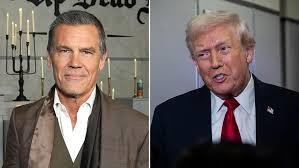
In that sense, his reflections on Trump sit comfortably alongside the thematic arcs of his recent work. Brolin’s understanding of power, influence, and human vulnerability has always colored his worldview as an artist. Trump, he suggests, is not simply a political figure but a case study in the psychology of crowds — an example of what happens when someone identifies a cultural insecurity and feeds it nonstop. To Brolin, politics is never just about policy; it is a form of storytelling, and Trump mastered the darker side of that craft.
Meanwhile, others who worked with Trump before his presidency have echoed pieces of Brolin’s experience. Oliver Stone once recalled directing Trump’s unused cameo in “Wall Street: Money Never Sleeps,” and described him as exhaustingly confident, always popping up after each take to ask whether his performance was as great as he believed. Stone, who has directed some of Hollywood’s most forceful personalities, found the bravado overwhelming. The anecdote underscores the core of Trump’s personality as Brolin remembers it — a man fueled by attention, perpetually performing, driven by a need for validation that matched the public’s hunger for spectacle.
Brolin’s distance from Trump today is not rooted simply in political disagreement but in a moral red line. He speaks as someone who has spent decades around fame, around people who manipulate narratives, around figures who can bend crowds to their will. To him, Trump represents an extreme version of something Hollywood already understands: a personality sculpted for maximum impact, someone who discovered that attention — whether positive or negative — can become a gravitational force.
Yet Brolin’s reflections also contain a certain sadness. Beneath the criticism is the memory of a time when the connection felt uncomplicated, when Trump’s impulses toward self-promotion were quirky rather than alarming. Brolin doesn’t deny that he once respected Trump or that he found him interesting; instead, he recognizes how dramatically people can evolve when power elevates their instincts. In his view, political fame amplified qualities that were always present in Trump, turning small personality quirks into national crises.
As Brolin continues discussing his past, he also emphasizes the fluidity of identity. Just as actors transform from one role to another, public figures reinvent themselves constantly. Trump’s reinvention was simply more dramatic than most — from celebrity businessman to political figurehead, from tabloid regular to president. For Brolin, witnessing that shift from a semi-personal vantage point created a uniquely complicated emotional landscape: part bewilderment, part disappointment, part recognition that larger cultural forces—not just individual choices—shape the evolution of public figures.
Today, Brolin speaks less about Trump as a one-time acquaintance and more about what Trump symbolizes. He portrays him as a mirror, reflecting the desires, fears, and vulnerabilities of the population. Whether one finds Trump inspiring or alarming, Brolin argues, he exposes something about the national psyche that cannot be ignored.
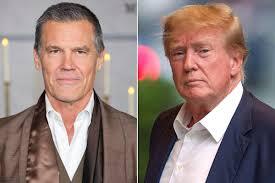
And in that sense, Brolin’s reflections become about far more than one former friendship. They become a commentary on America itself — on the stories people believe, the leaders they follow, and the complicated dance between validation and authority. Through his own journey from admiration to disillusionment, Brolin reveals just how profoundly a society can change in a single decade, and how even the most unlikely intersections between Hollywood and politics can become windows into deeper cultural truths.